
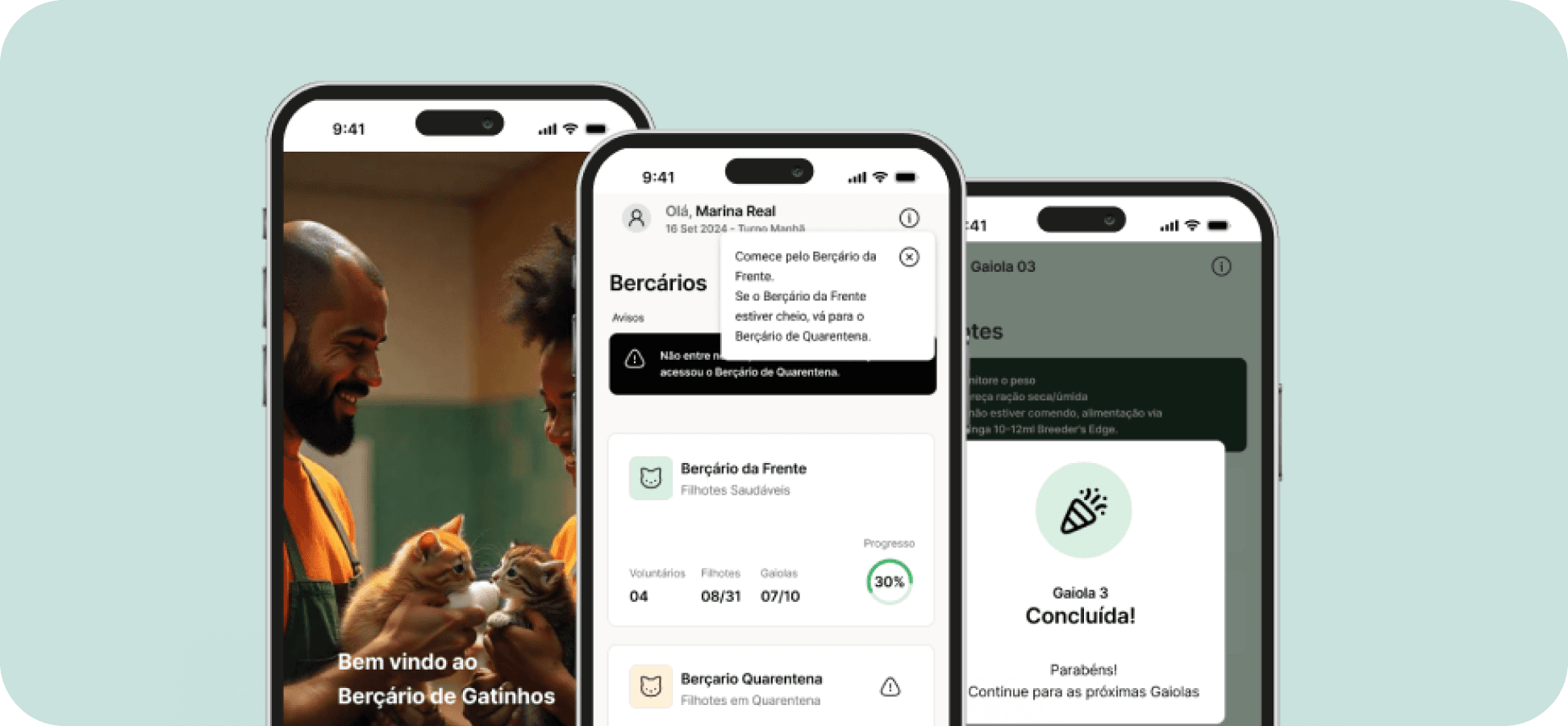
Mobile app that centralizes veterinary care and optimizes the daily tasks of volunteers at the Peninsula Humane Society.
Design for NGOs
Animal Health
Automation
Context
During my volunteer work at the Peninsula Humane Society animal rescue NGO in San Francisco, California, I noticed that the health records of the puppies were kept manually and repetitively. This led to rework for the volunteers, confusion, and even risks for the animals. From this real-life experience, the motivation to create a more efficient digital solution arose.
Challenge
How to ensure that volunteers, with varying levels of experience, take care of puppies safely, accurately, and independently, while respecting the protocols and agility that the routine demands?
Solution
I developed a mobile application that automates the health record of puppies, organizes tasks by priority, and shows in real-time the distribution of volunteers in the nurseries. The solution also includes an interactive tutorial that guides new volunteers step by step.
Impact
The developed system makes the health record of animals safer and more efficient, reducing human errors and increasing productivity in the nursery by up to 30%.

The Institution
The Peninsula Humane Society & SPCA is a non-profit organization in the San Francisco Bay Area dedicated to the rescue and welfare of domestic and wild animals. With around 5,000 lives saved each year, its mission is to promote animal protection and care in the region.
Voluntary Work
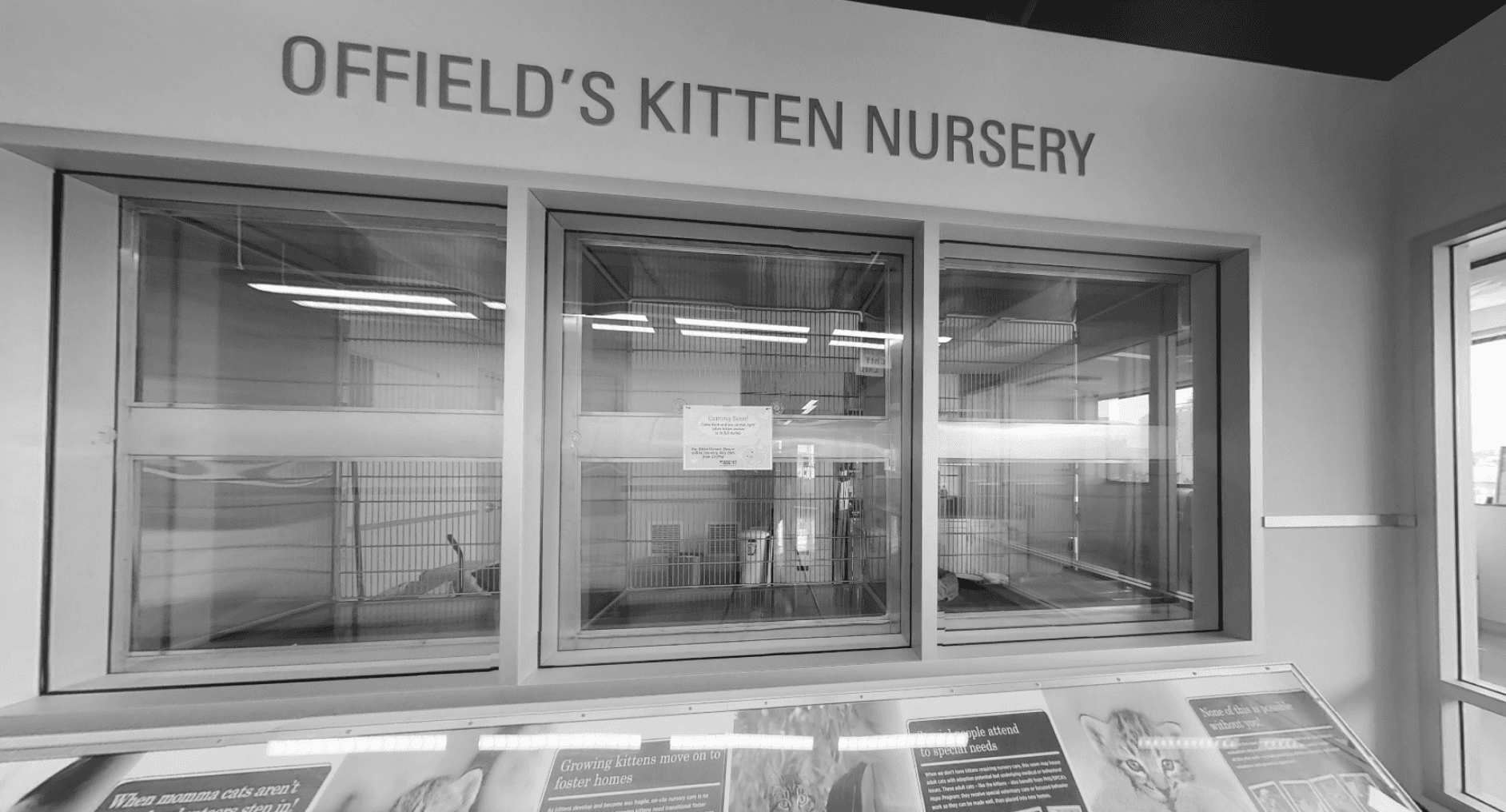
The Kitten Nursery welcomes orphaned or vulnerable kittens, providing intensive care from quarantine to full recovery. Volunteers ensure feeding, hygiene, and socialization, preparing the animals for foster homes and adoption.
Understanding the Journey of Volunteers
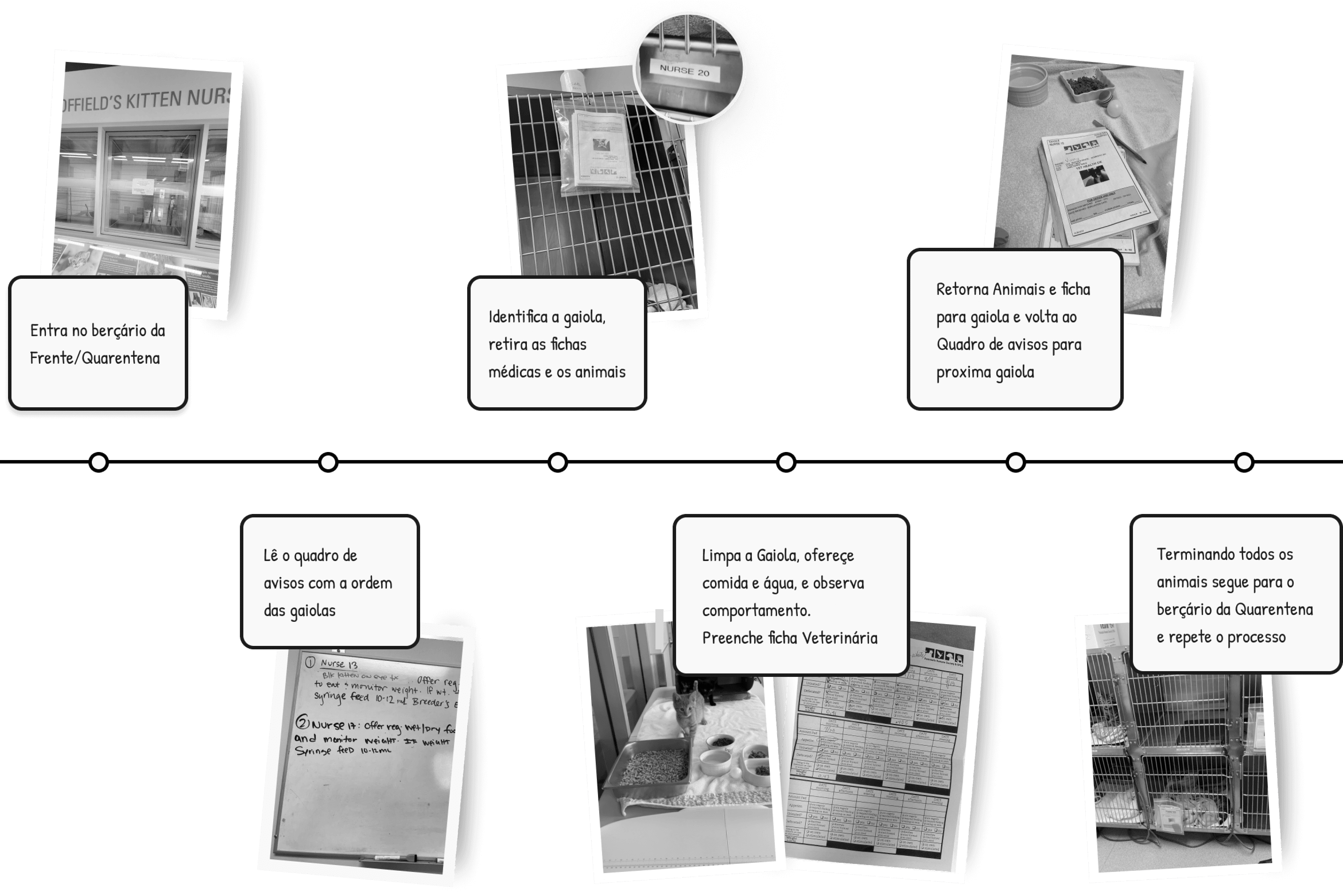
By observing the routine of the volunteers, I mapped the entire journey they undertook, from the arrival until the end of each shift. This process revealed confusing stages, repetitive tasks, and communication failures, which directly impacted the care provided to the animals.
The health records of the puppies were maintained manually, which caused confusion in identifying which ones had already been attended to, increased the risk of omissions in care, and made it difficult to efficiently allocate volunteers due to a lack of visibility of the specific needs of each nursery.
Observing the Difficulties of the Volunteers
After mapping the journey and identifying pain points, I realized the need to better understand who the volunteers were, their difficulties, and the impact of this on caring for the puppies.
From observations and informal conversations, I built personas and problem scenarios that revealed motivations, frustrations, and real objectives. These profiles guided design decisions that were more aligned with users' needs and the context of the system.
Proto Persona Nolan
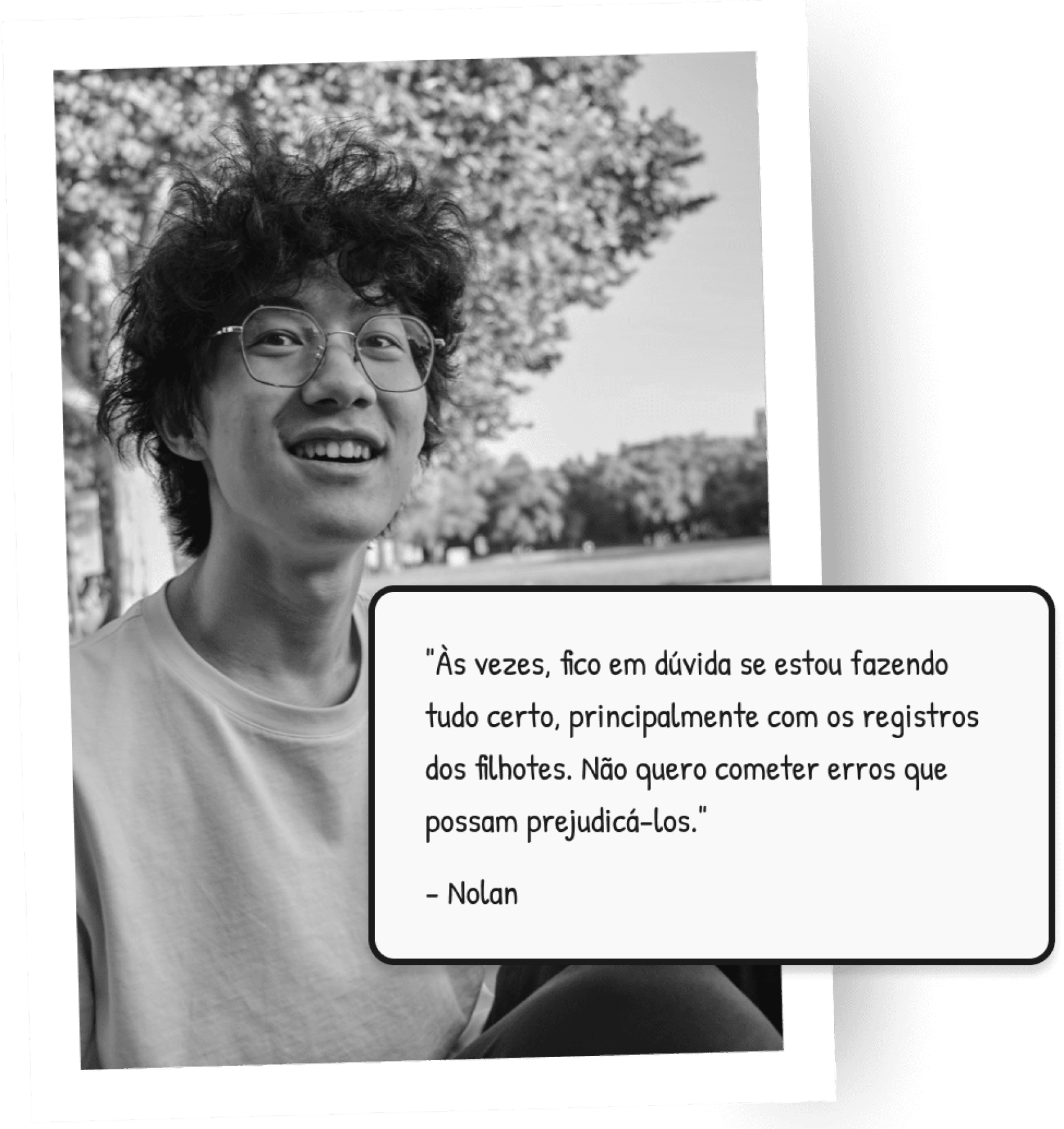
Nolan is a 17-year-old high school student. He lives with his parents in a house in San Mateo, California, just a few minutes from his school. Nolan is in his senior year and needs to complete a minimum number of community service hours to graduate, as required by the school. Since he loves animals, he decided to take advantage of the start of summer vacation to volunteer at the Peninsula Humane Society & SPCA's Kitten Rescue Nursery in Burlingame.
After signing up for the program on the organization's website, Nolan received a confirmation email and attended an in-person training session for new volunteers.
During the training, Nolan felt welcomed but also overwhelmed by the amount of information and details about the tasks. He realized that volunteering requires organization, attention, and a high level of responsibility.
Despite his concern about forgetting any important steps, Nolan is a motivated, curious, and committed young man, always showing a willingness to learn.
Problem Scenario
Nolan arrived at the nursery early in the morning to start his first shift as a volunteer at the Peninsula Humane Society. Following the guidelines from training, he opened the organization's app and consulted the day's information, which included the cages and general instructions for caring for the animals.
As he began his routine, Nolan noticed that the app did not show which animals and cages had already been attended to by other volunteers, which created uncertainty about where to start.
Additionally, although the app contained important information, Nolan had difficulties organizing himself and remembering all the steps for caring for the puppies, as learned in training.
He wished he had a tool that could help him remember the steps of the process and his responsibilities, which would increase his confidence and allow him to better enjoy his experience as a volunteer.
Difficulties
Nolan has difficulty remembering all the steps in caring for the puppies, as he learned in training.
He does not know which animals and cages have already been taken care of by other volunteers, which makes him feel insecure about where to start.
Objectives
Tutorial interactive to guide new volunteers like Nolan, ensuring they follow the essential steps in caring for the animals, fostering trust, efficiency, and avoiding mistakes.
Having a clear and real-time view of the status and priority of the cages, allowing Nolan to organize his tasks efficiently and autonomously, without the need for constant supervision.
Proto Persona Anne
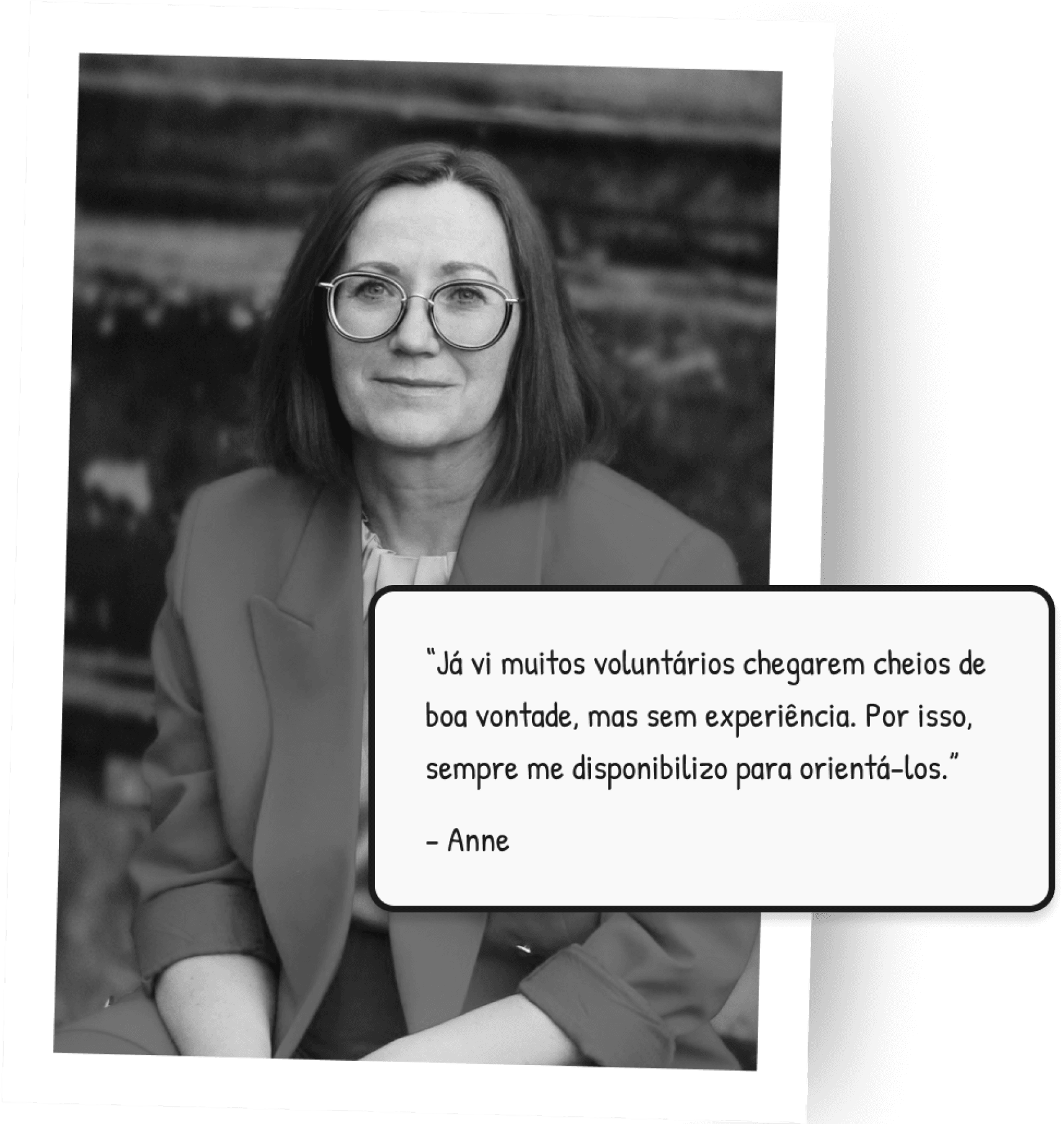
Anne is 52 years old, works as an advertising professional, and lives with her husband in San Francisco, California. Passionate about cats, she finds purpose by dedicating her free time to volunteer work that helps animals in vulnerable situations.
Every beginning of summer, Anne offers to work as a volunteer at the Kittens Nursery at the Peninsula Humane Society & SPCA animal rescue center in Burlingame.
Anne is disciplined and commits to helping care for the kittens every morning for about 3 hours. To make good use of her time, she always seeks to discover in which nurseries her help is most needed.
She has faced challenges due to the inexperience of some volunteers, which motivated her to always be available to guide and support new members, ensuring a more efficient and careful work.
Anne values the opportunity to contribute to the well-being of the animals and feels fulfilled when she sees the positive impact of her actions.
Problem Scenario
Anne is a volunteer at the Humane Society and is excited to start her shift in the nursery for rescued kittens. Upon arriving on the second floor, where the two nurseries are located (the Front Nursery and the Quarantine Nursery), she quickly opens the organization’s app and logs in using her email.
Anne accesses the app to choose a nursery, but finds no information about volunteers or task progress. She opts for the Quarantine Nursery, which seems more empty, but upon entering, she realizes there are few animals and the two volunteers present are already managing to complete all the necessary tasks. Frustrated, she can no longer help in the Front Nursery. Anne wishes the app would show, in real-time, the number of volunteers and the progress of tasks to better plan her involvement and optimize her contribution.
Another problem faced by Anne is the medical records of the animals, which are fixed to the cages and need to be filled out manually by the volunteers. The records have already been accidentally swapped by an inexperienced volunteer, and Anne had a lot of work to identify the correct files for the animals.
Difficulties
A lack of visibility regarding the number of volunteers and tasks leads Anne to choose the unnecessary Nursery, causing frustration and inefficiency at work.
The manual filling of health records can cause accidental swaps, leading to confusion, rework, and risk to the animals.
Objectives
Information about the status of each Nursery: Provide real-time information on the number of volunteers and the progress of tasks in the nurseries, allowing users like Anne to identify which nursery needs support the most.
Organize the health data recording of the animals: Improve the efficiency and accuracy in recording health information of the puppies, replacing manual records with a standardized digital system, reducing errors, confusion, and delays in care.
Transforming Goals into Experience
After defining the objectives, I moved on to the stage of interaction modeling with MoLIC (Modeling Language for Interaction as Conversation).
Modeling the interaction allowed to represent all usage possibilities of the system from the point of view of the user-interface conversation, ensuring a smooth and intuitive experience.
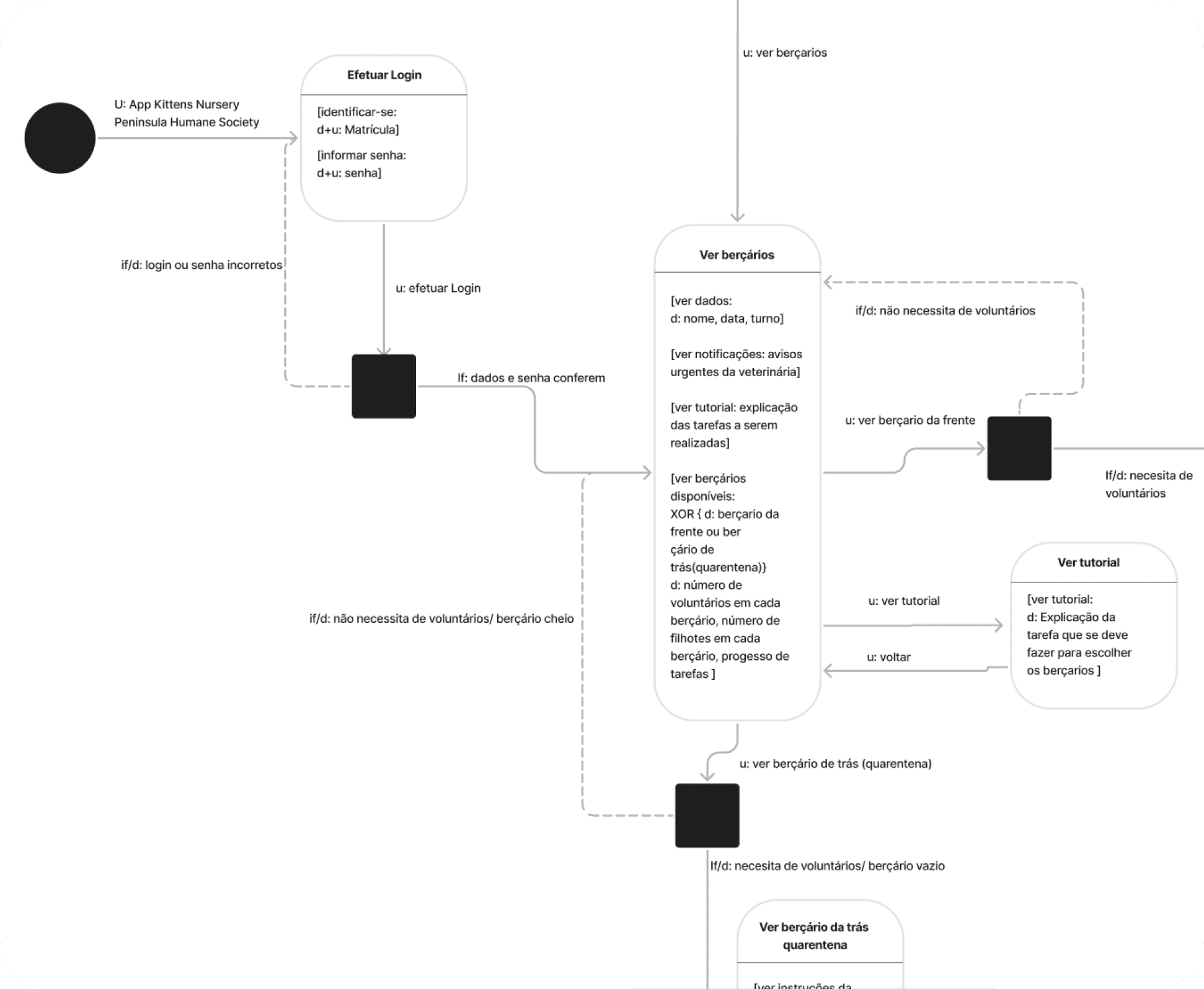
Cut of the MoLIC from the system entry and Visualization of Nurseries.
MoLIC Model Description for Protopersona Nolan
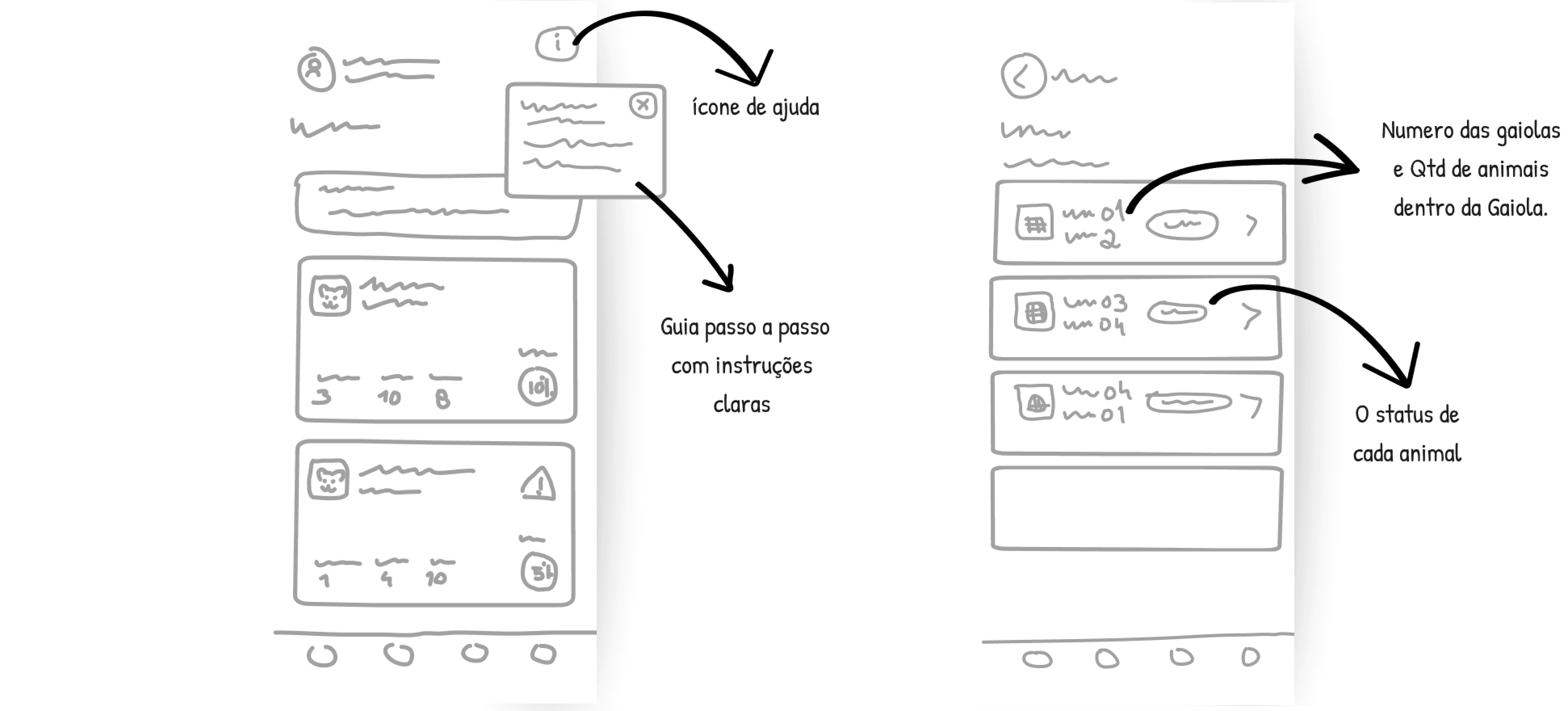
Home Screen
Screen Cages
Nolan accesses the system and identifies the help icon and accesses the tutorial
After accessing the nursery Nolan views the status of each cage
Model Description MoLIC for Protopersona Anne
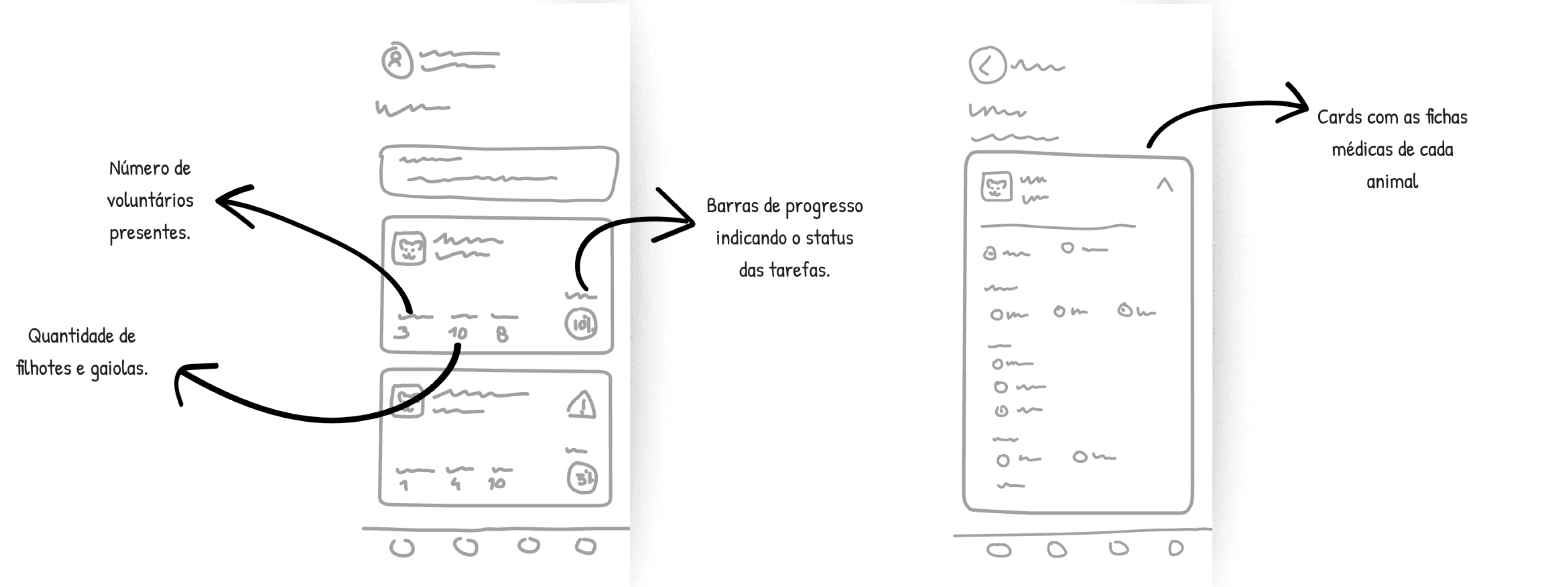
Home Screen
Screen Cages
Design System and Documentation
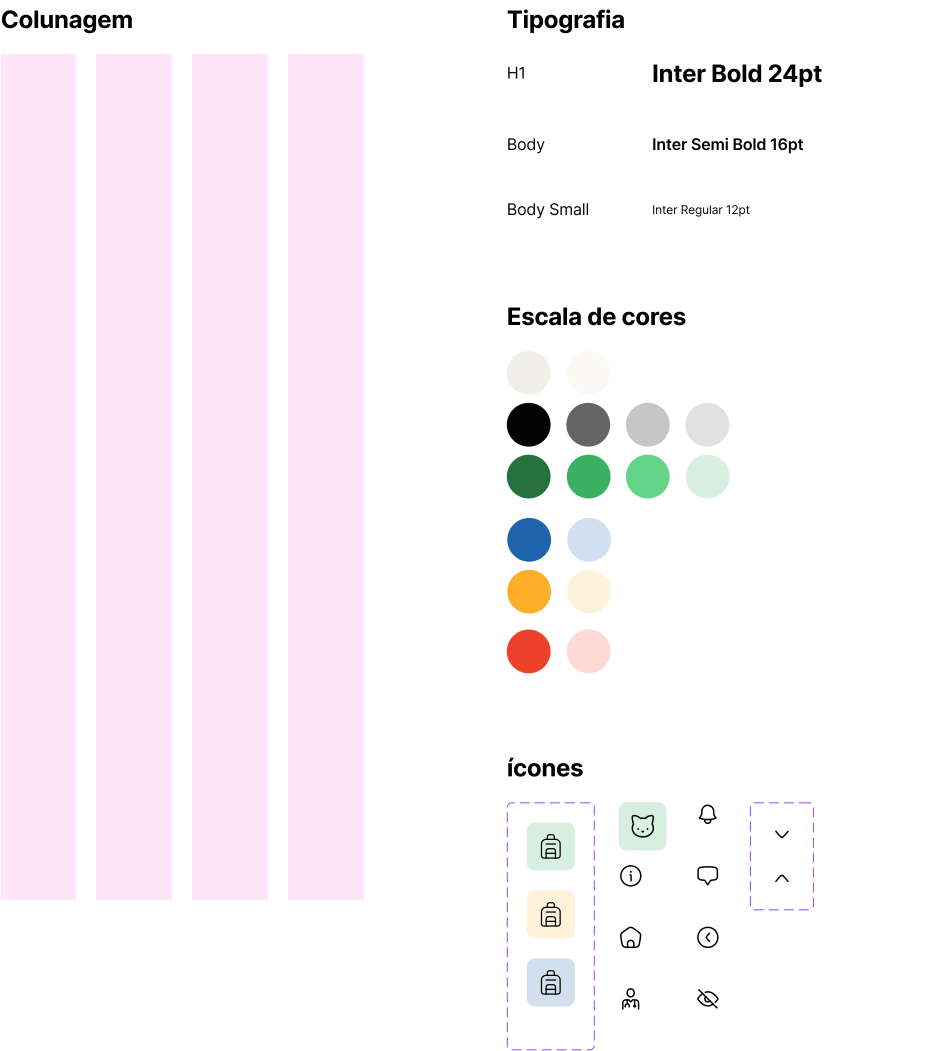
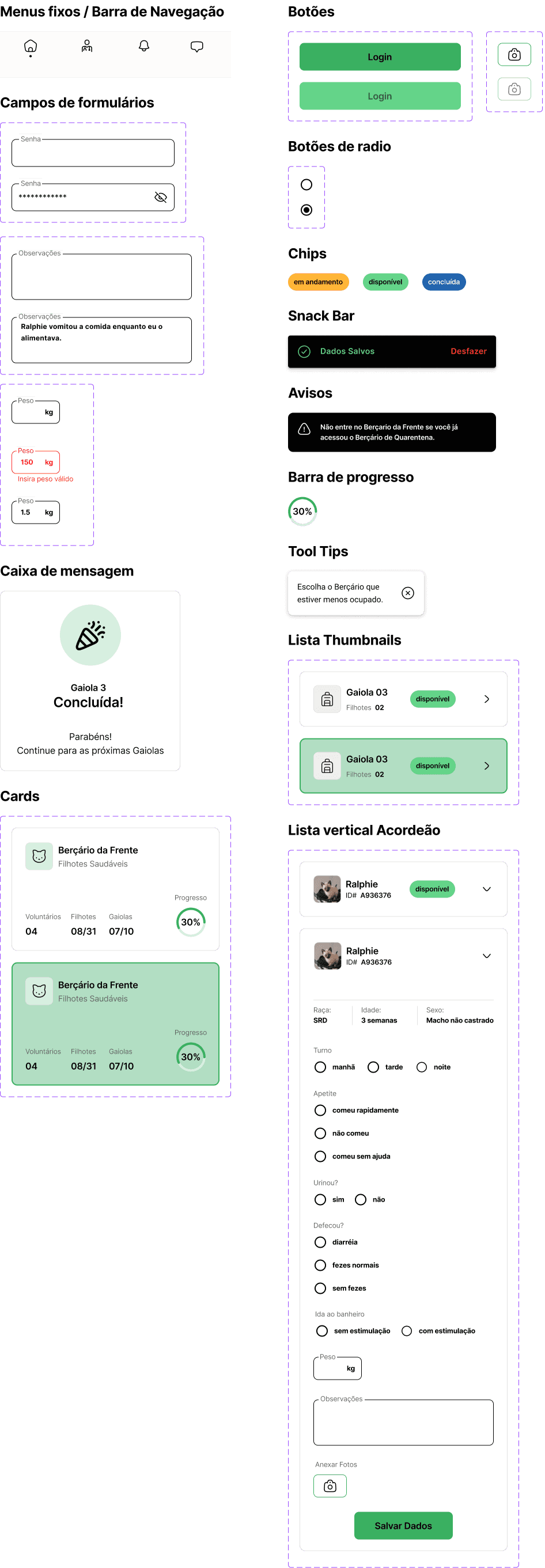
A complete Design System was created with the definition of the color scale, typography, and spacing, ensuring consistency and accessibility. Based on these foundations, atoms, cells, and molecules were developed, organizing the components in a modular way. The entire system has been documented in Figma to facilitate collaboration and the evolution of the product.
From Manual Registration to Digital Solution
With the screens drawn on paper, I was able to move on to the high-fidelity prototype. I designed the components and style guide to start the Design System.
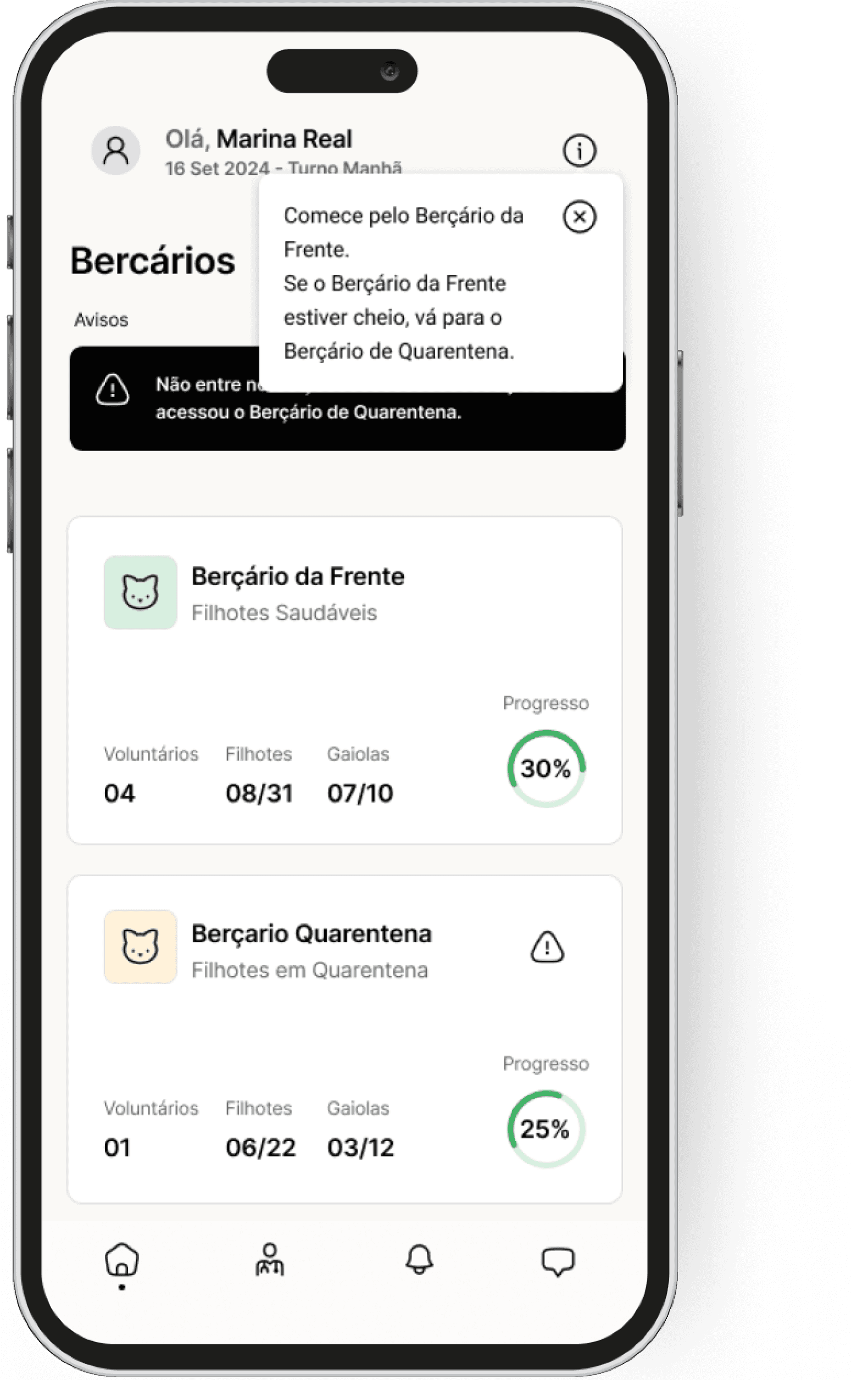
Home Screen
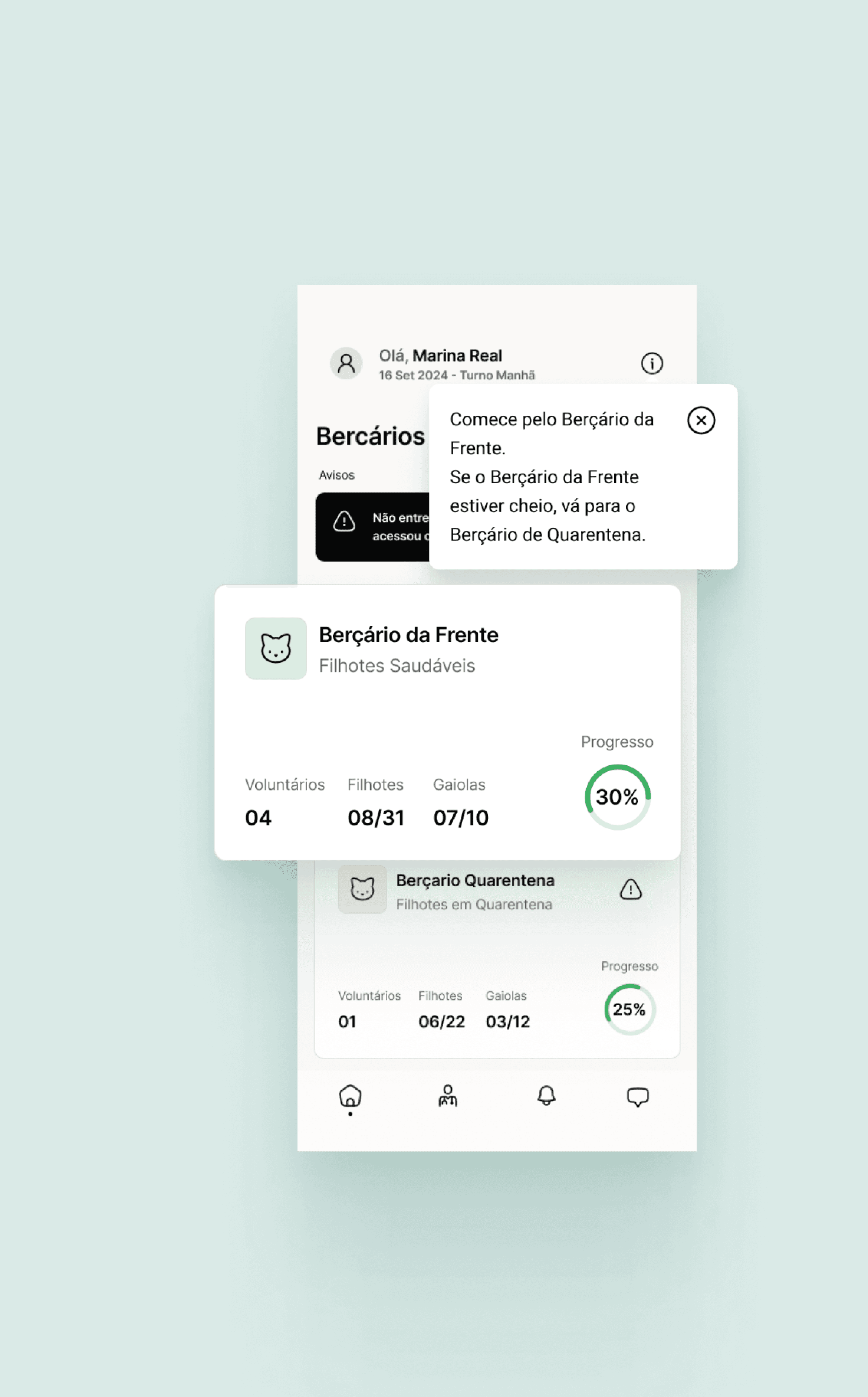
The screen displays the two nurseries with real-time data on number of volunteers, puppies, cages, and progress, allowing Anne to quickly visualize the nursery that needs support the most and make an informed decision about where to act.
By tapping the "i" icon, a tutorial displays guidelines, helping Nolan to act with more confidence and efficiency, even in a new environment.
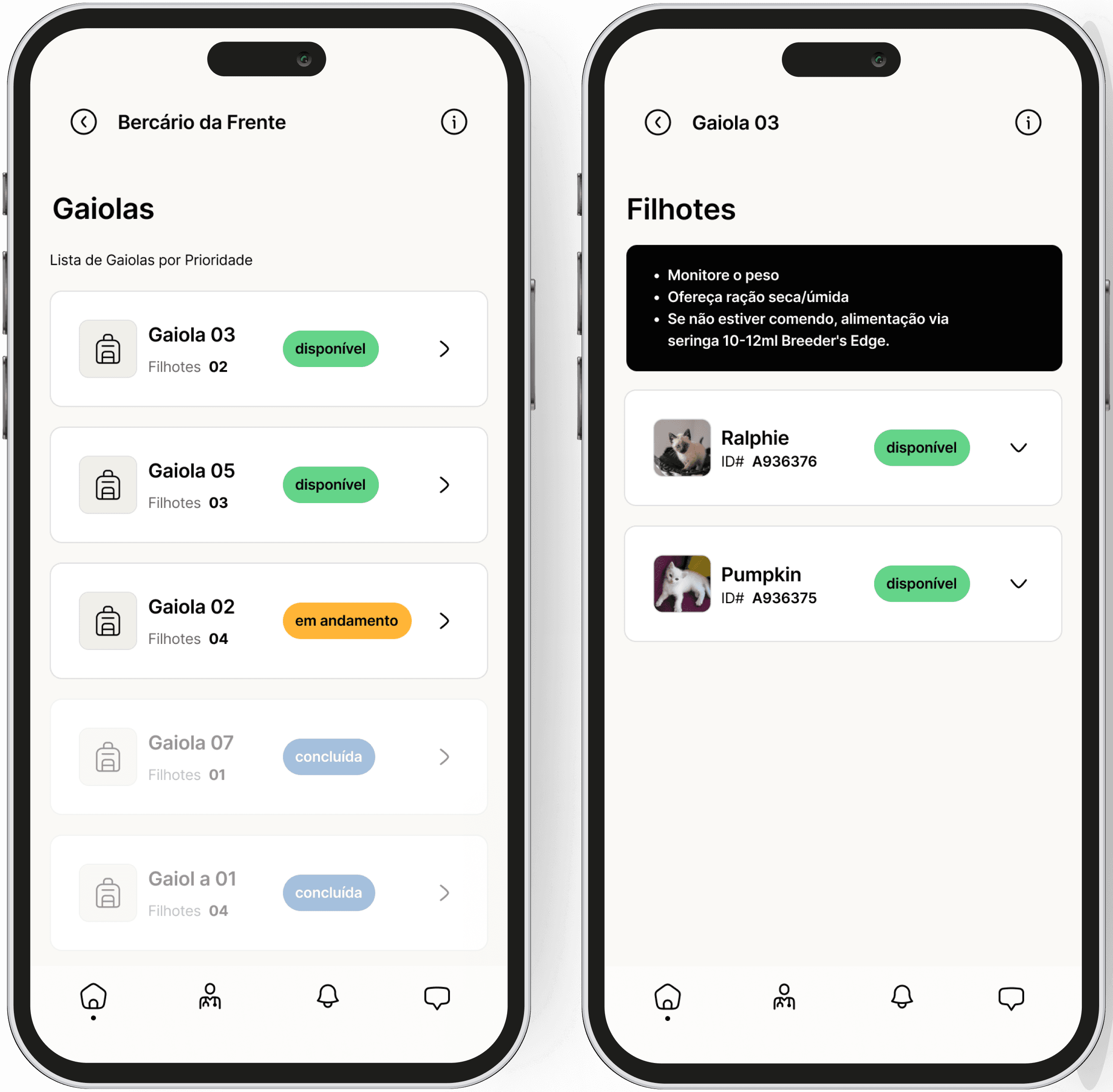
Screen Cages
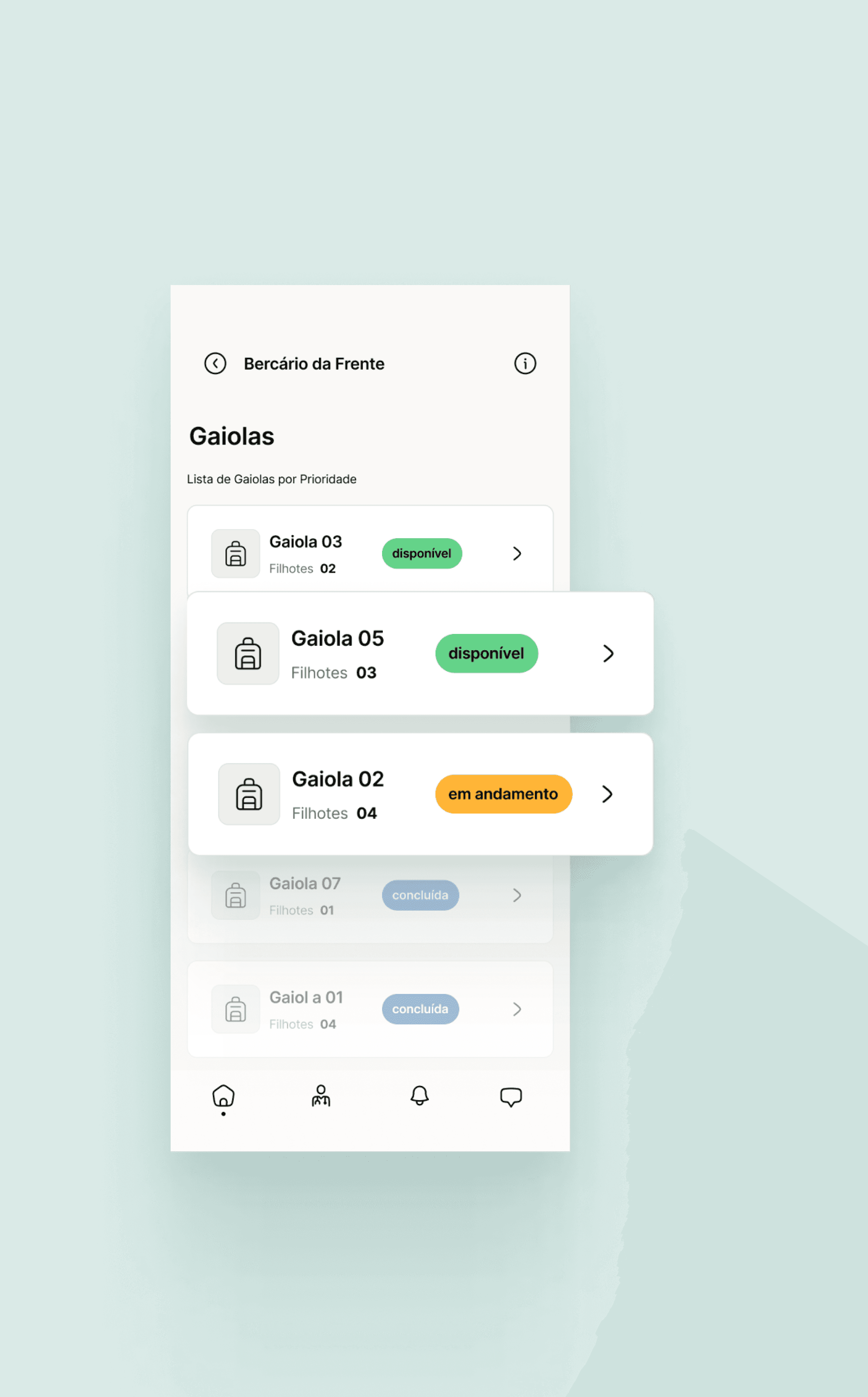
The screen displays cages organized by priority, with cards indicating the status: Available, In progress or Completed, ensuring an efficient workflow without duplication.
A tutorial guides Nolan clearly, eliminating doubts about priorities and making the process more intuitive and efficient.
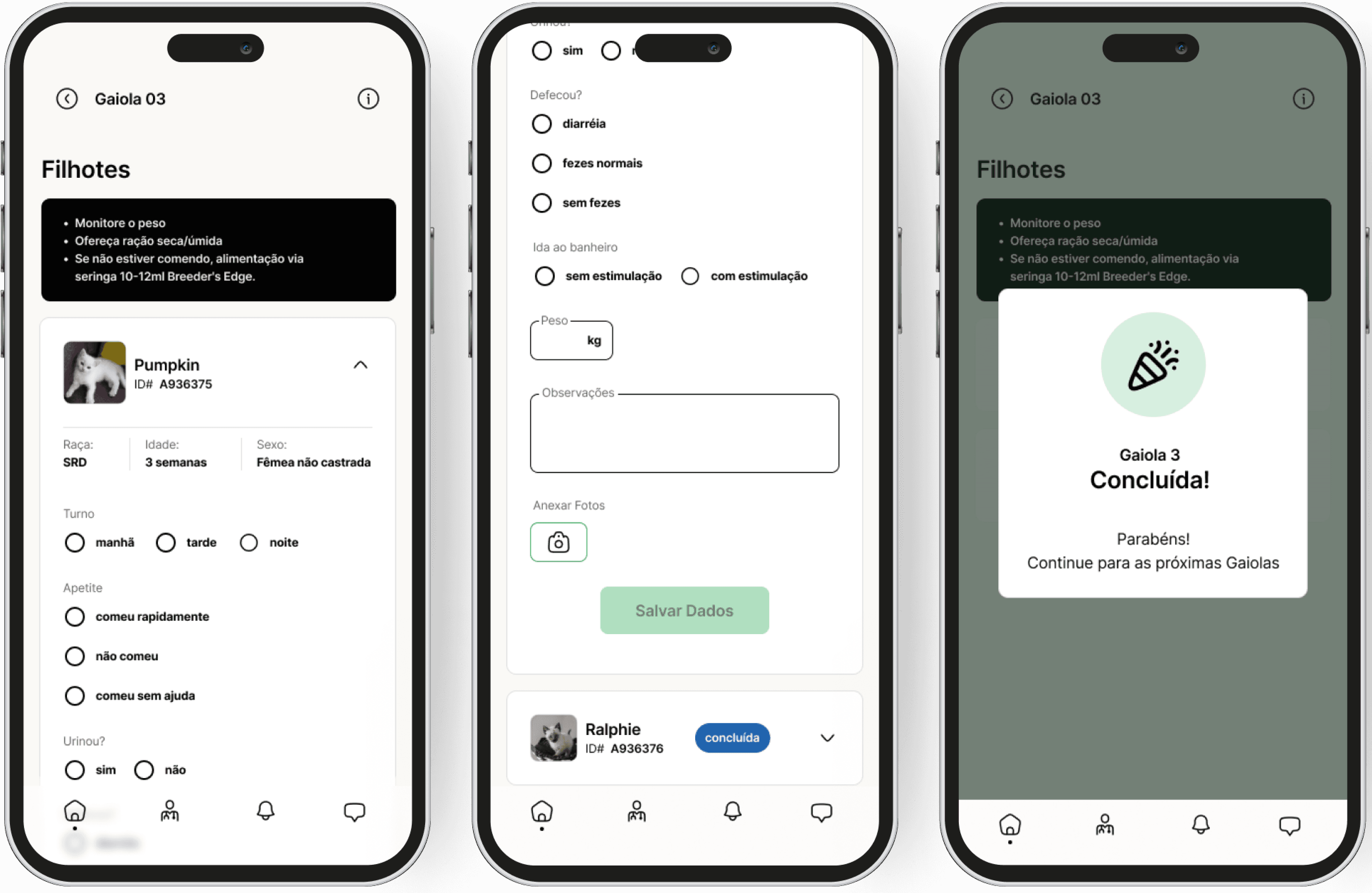
Screen Puppies
The 'Puppies' screen displays the animals present in the selected cage.
Nolan selects the animal and fills out the corresponding medical information.
Important warnings are displayed with specific care instructions for each animal.
After filling out all the information, the user taps on 'Save' to record the information.
This organizes the health record of the animals without the risk of being mixed up.
When the user completes caring for all the animals in the cage, the system automatically informs that the cage has been completed and directs the user to the cage screen, allowing them to choose another cage to attend to.
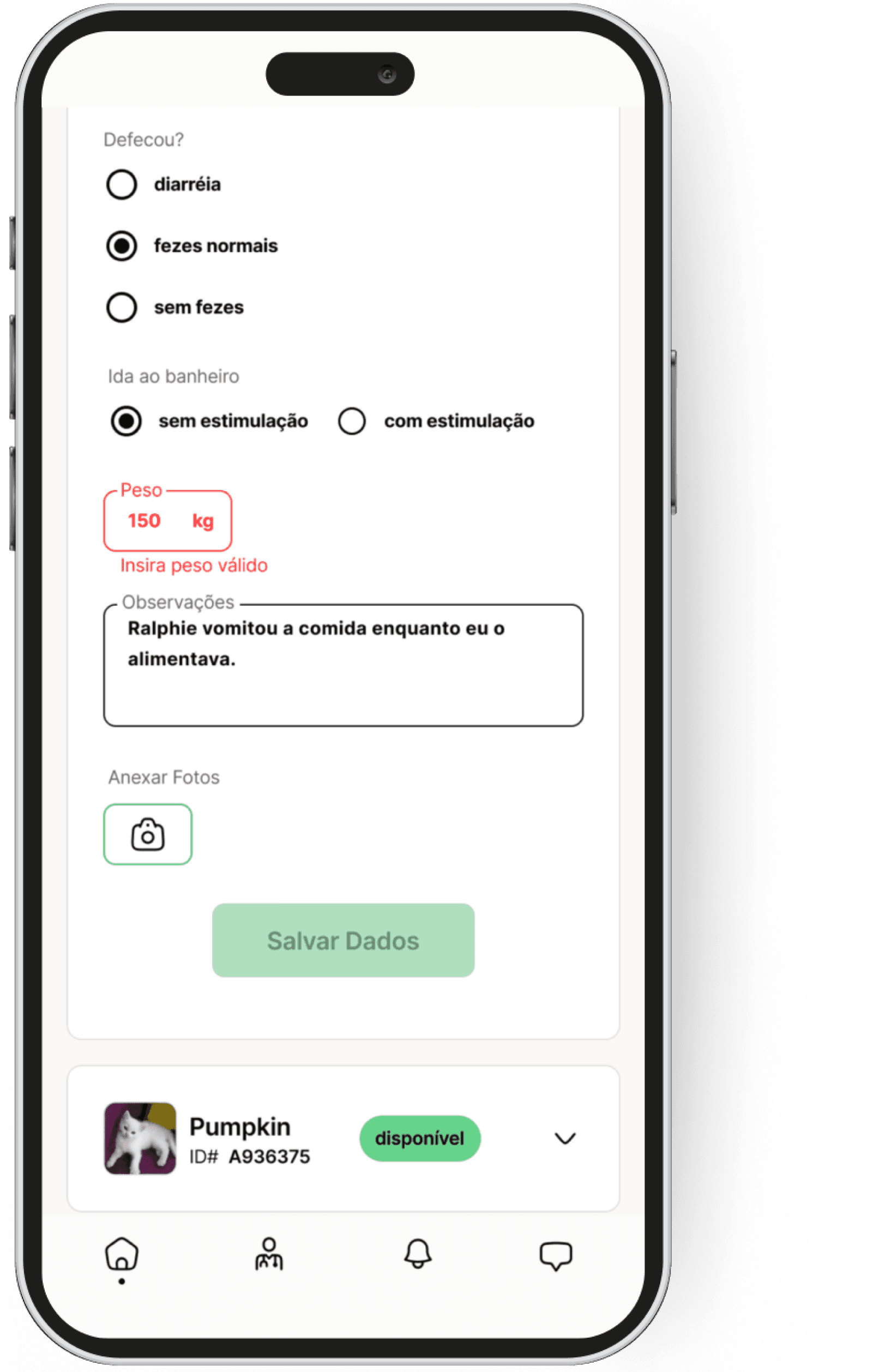
Error Prevention
Screen with error messages that may occur during interaction. If the user incorrectly fills in the animal weight field, a red message will inform "Please enter a valid weight," and the "Save" button will remain disabled until the error is corrected.
Key learnings
1
Although I did not conduct formal research, the creation of protopersonas based on my experience as a volunteer helped me better understand the needs of users
2
Creating the problem scenarios allowed me to develop solutions more aligned with users' needs, as well as to validate design decisions more effectively.
3
The modeling with MoLIC was essential to structure the interaction between the volunteers and the system, helping me make more assertive design decisions.
Next steps
System Usability Quality Evaluation
Heuristic Evaluation and Usability Testing
Next Case
Used Books