
My Paper
Product Design Consulting (UX/UI)
Stakeholder management
Discovery
User research
Prototyping
Usability test
Context
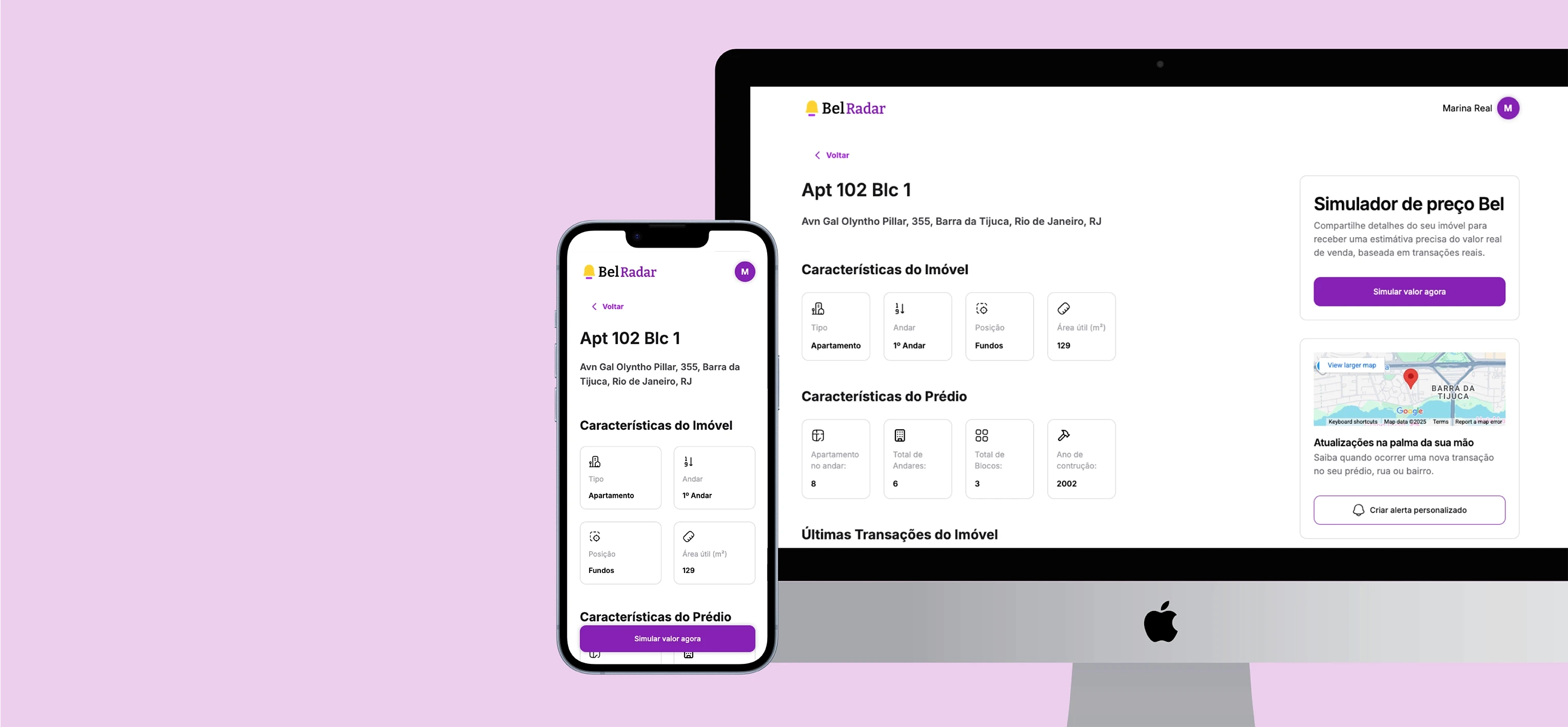
Bel is an early-stage proptech that aims to transform the assessment and sale of properties in Brazil. I was hired as a Product Design consultant to enhance the experience of Bel Radar, an automated pricing tool based on AI, focused on the real estate market of Rio de Janeiro.
At the time, the product was still in MVP stage. The challenge was to transform real estate and transactional data into a clear and trustworthy digital experience, capable of attracting owners and generating value for investors, brokers, and curious users.
Problem
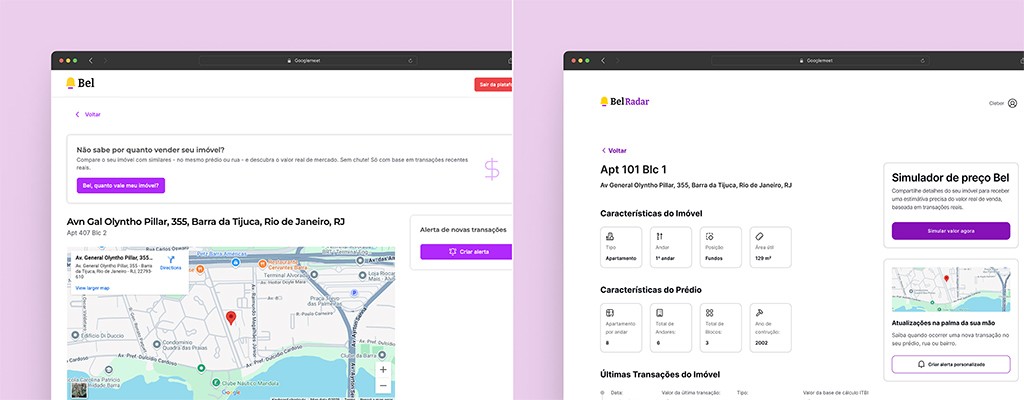
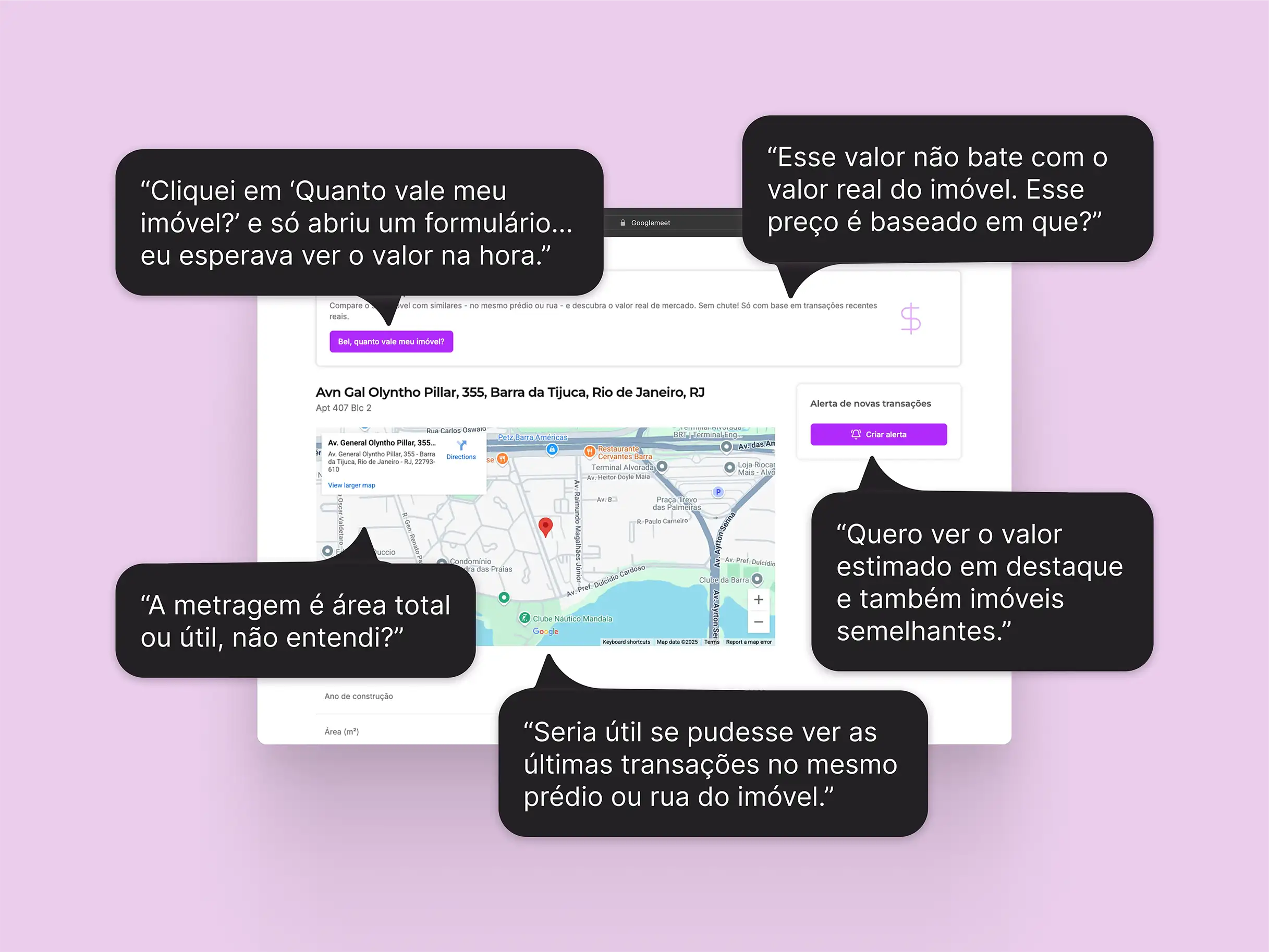
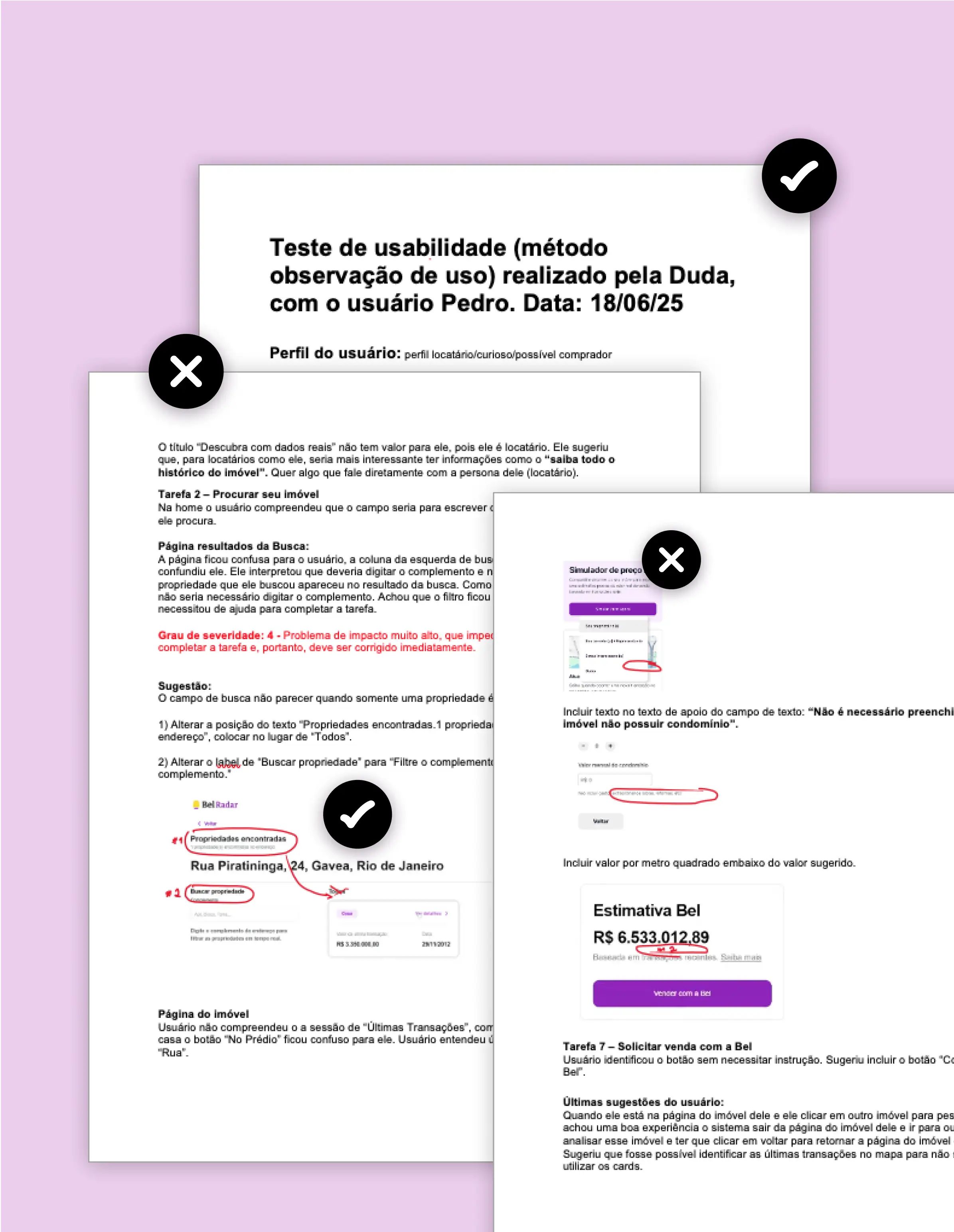
During the discovery phase, we identified, through usability tests and concept research, that the tool's flow was confusing and not intuitive. The lack of guidance and the excess of information caused frustration, leading to abandonment of the funnel.
Moreover, the transactional data, which is the main differentiator of the product, was not highlighted, which caused confusion with the property's selling price and decreased the perceived value of the solution.

Process
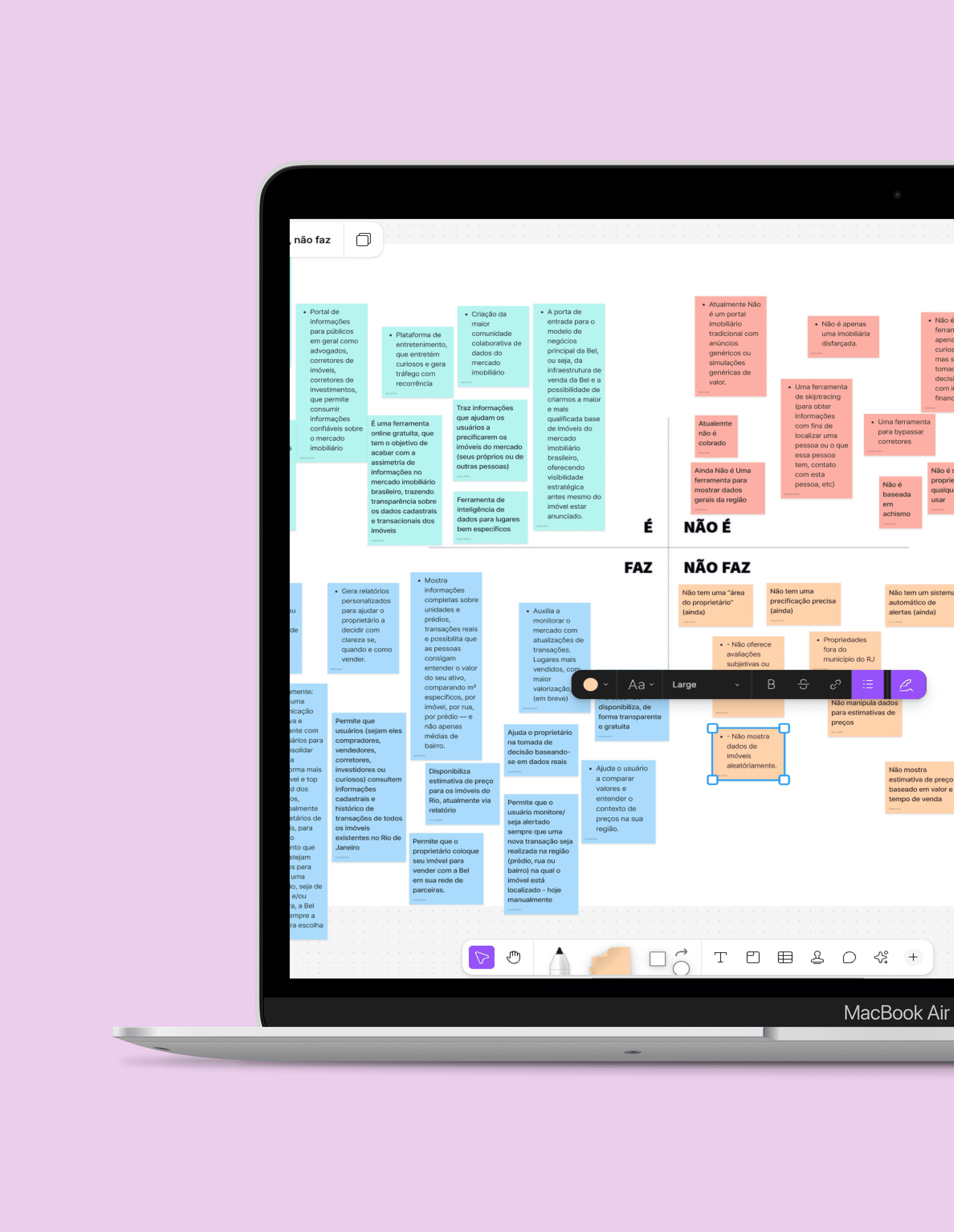
I facilitated a Lean Inception workshop with key stakeholders to align the MVP vision.
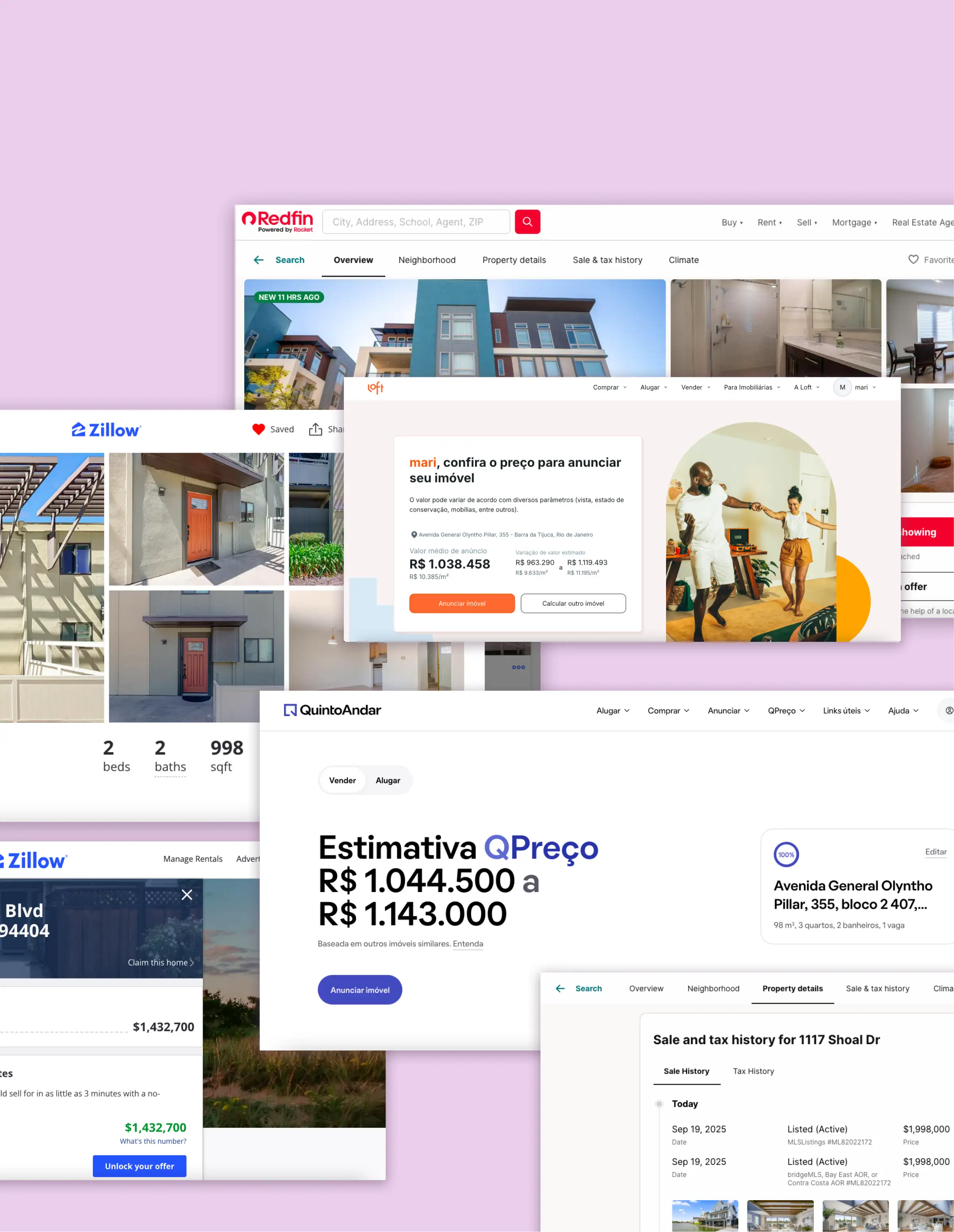
I conducted a competitor analysis and benchmarking to map market references and identify best practices applicable to the product. From a heuristic evaluation of the existing version, I identified the main usability issues.
I conducted qualitative interviews with users (homeowners, house flippers, and investors) to validate the concept and gather insights. Based on these learnings, I redesigned flows, wireframes, and interactive prototypes focusing on clarity and efficiency of the experience.
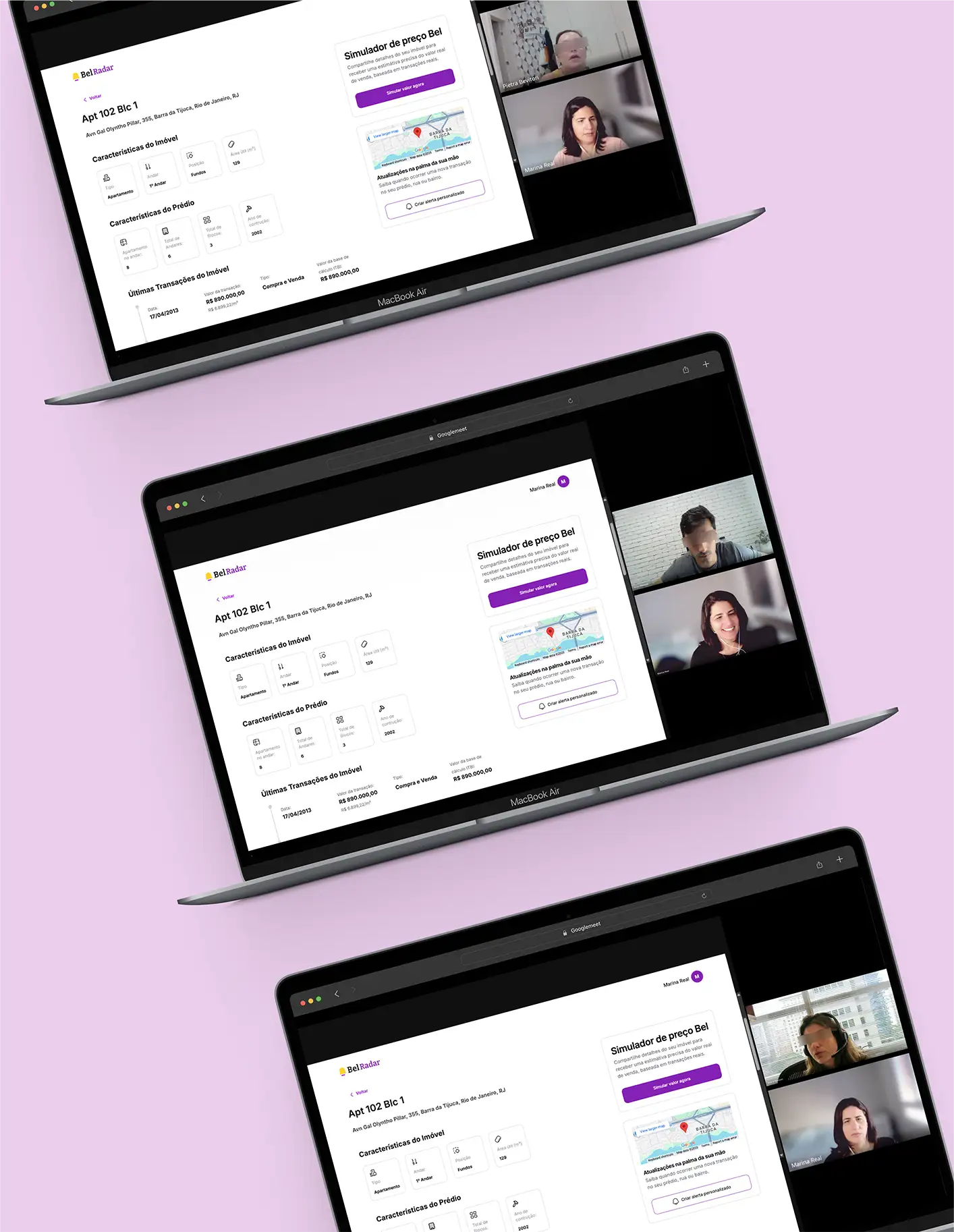
I closely collaborated with the data and engineering teams to ensure technical feasibility and good performance of the proposed solutions. Finally, I validated the improvements in new usability tests with real homeowners.
Solution
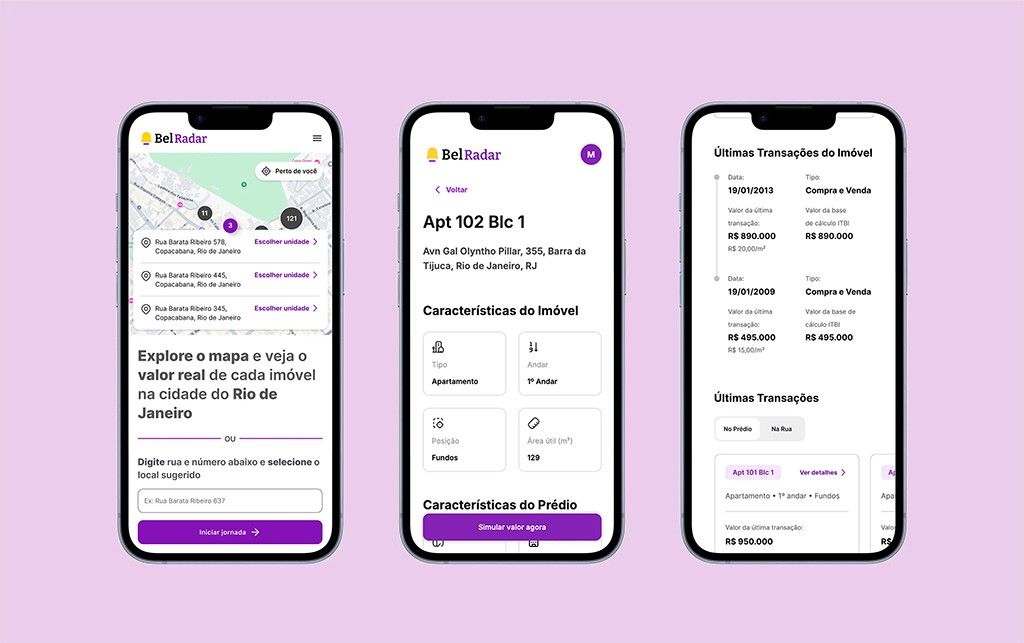
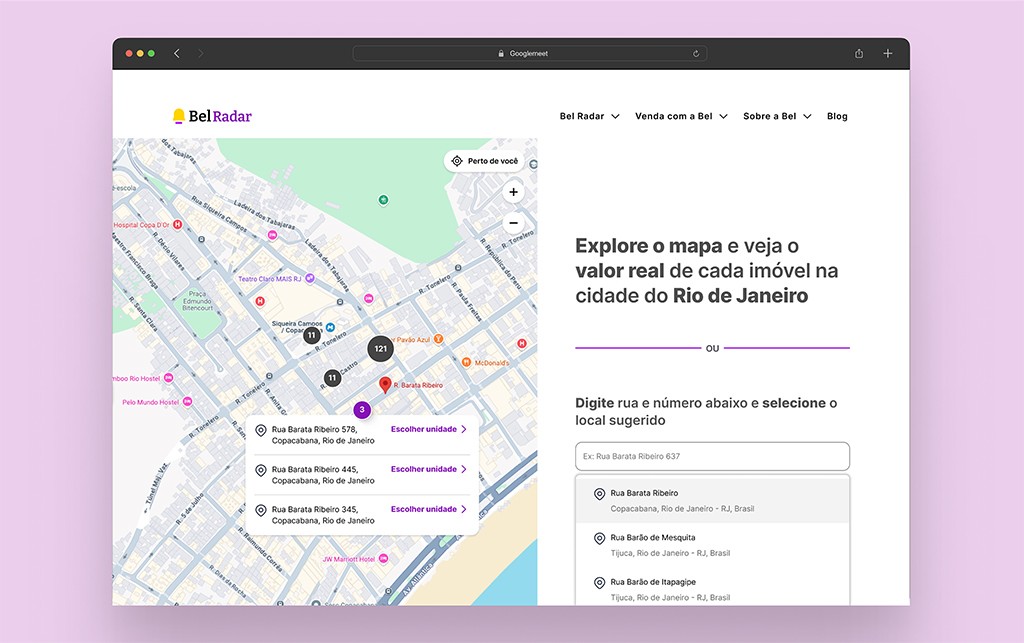
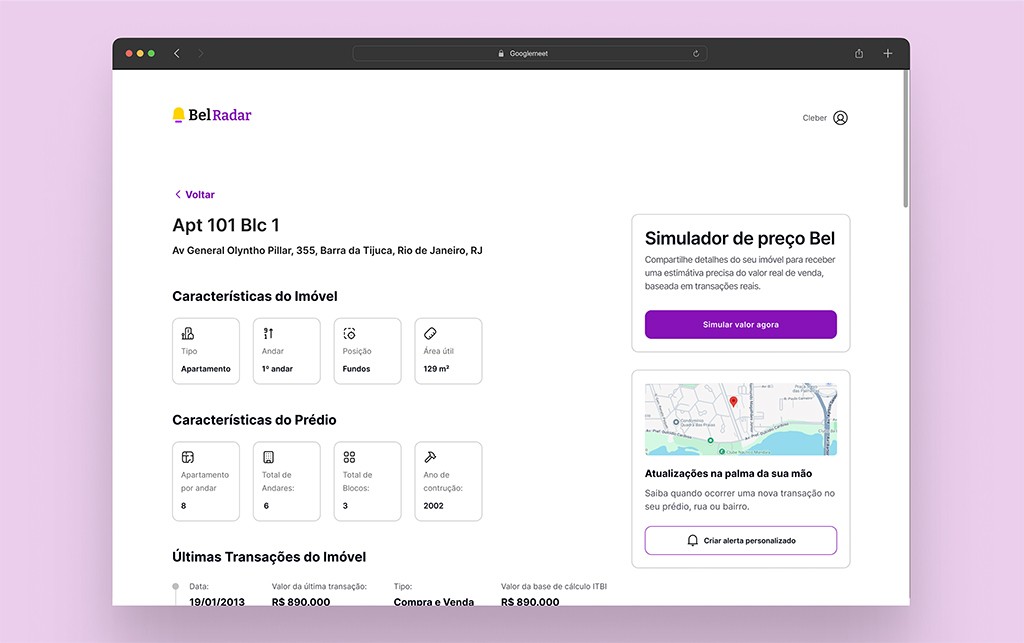
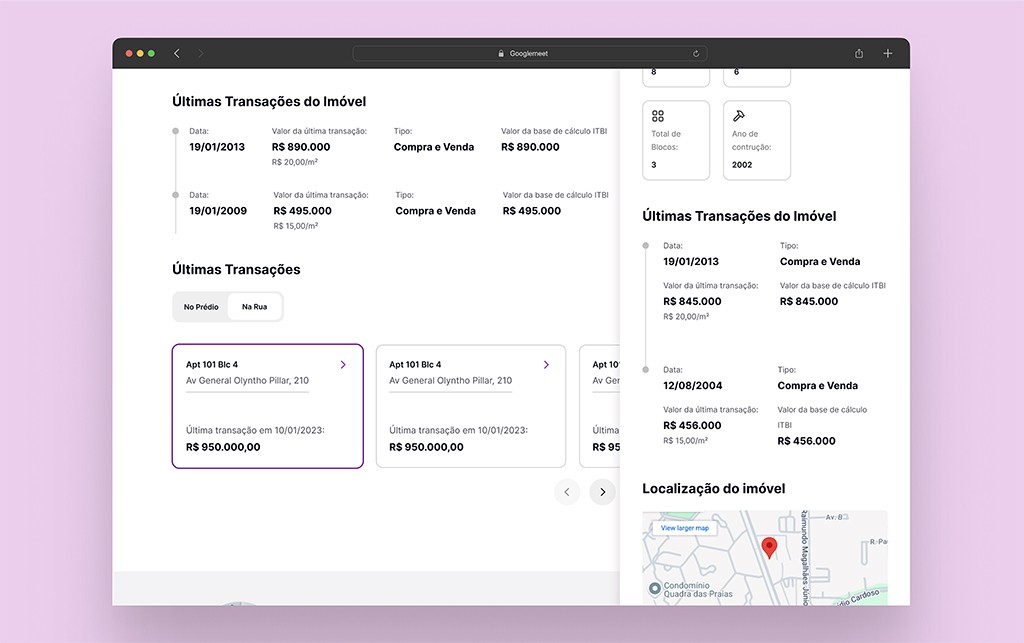
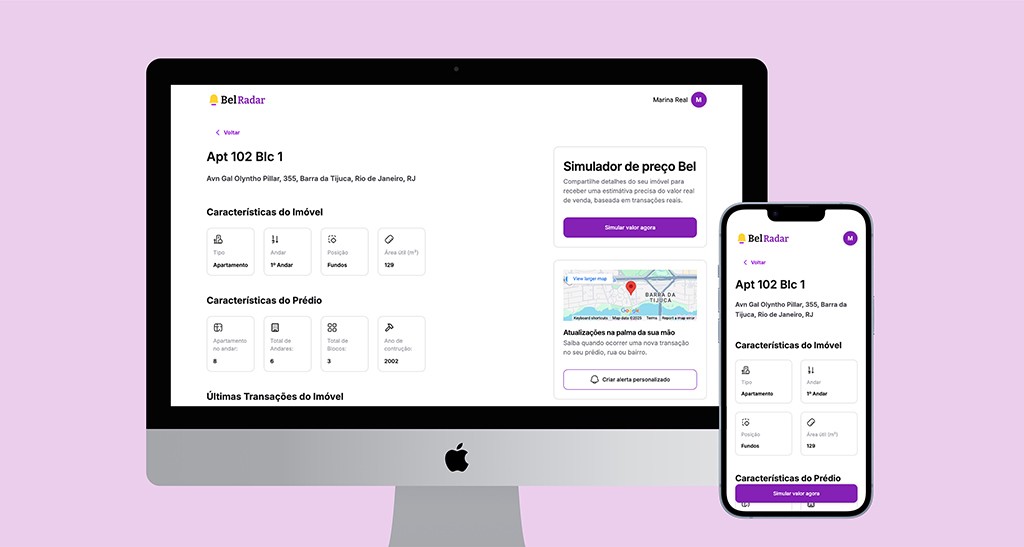
I restructured the experience by highlighting the value of transactional data, including the negotiated price and a more visible CTA on the results page. The new property page now presents information in a hierarchical manner, including transactional data by building and street.
I implemented a new, more agile registration flow, reducing the number of fields and increasing conversion. I also standardized visual elements (colors, typography, spacing) to improve readability and developed a component library to ensure consistency and scalability.
Key learnings
The usability tests confirmed that the new flow brought more clarity and better understanding of the interface. However, the main insight came from user behavior: the transactional data began to be seen as the greatest value of the tool, while the suggested value of the property lost prominence.
This learning was essential to reevaluate the product goals and reposition the value proposition based on the real needs of the users.
Delivery

Next Case
Rescue Animal Health Record